لغات پرکاربرد انگلیسی همان کلمههاییاند که در بیشتر متنها و گفتوگوها تکرار میشوند؛ مثل be، have، go، time و because. در این مطلب ۳۳۸ لغت پایهی سطح A1 و A2 را موضوعبهموضوع با معنی فارسی و جملهی نمونه آوردهایم و گفتهایم چطور از همین هسته به هزار لغت برسی.
فهرست مطالب
- این فهرست چطور انتخاب شده و چطور از آن استفاده کنی
- کلمههای دستوری و ضمیرها
- فعلهای پایه
- آدمها و خانواده
- زمان، روزها و عددها
- خانه و وسایل روزمره
- خوراک و نوشیدنی
- مکانها، شهر و سفر
- بدن و سلامتی
- کار و درس
- صفتهای پرکاربرد
- قیدها و کلمههای ربط
- احساسها، آبوهوا و طبیعت
- از این فهرست تا ۱۰۰۰ لغت: نقشهی راه
- تمرین کن
- سؤالهای رایج
- منابع
این فهرست چطور انتخاب شده و چطور از آن استفاده کنی
این فهرست برای کسی است که تازه شروع کرده یا پایهاش لرزان است. لغتها را با نگاه به سطح A1 و A2 در فهرستهای بسامدی معتبر انتخاب کردهایم؛ بهخصوص Oxford 3000 که طبق توضیح رسمی Oxford Learner's Dictionaries، بر اساس بسامد در پیکرهی بیش از ۲ میلیارد کلمهای Oxford English Corpus و میزان ربط به نیاز زبانآموزها ساخته شده و هر لغتش به یک سطح CEFR وصل است. معنیهای فارسی و همهی جملههای نمونه را خودمان نوشتهایم، ساده و نزدیک به زندگی روزمره.
بگذار صادق باشیم: اینجا ۳۳۸ مدخل پایه میبینی، نه هزار لغت. دلیلش این است که فهرست هزارتایی بدون مثال، بیشتر شبیه دفترچهی تلفن است تا ابزار یادگیری. ما هستهی پرکاربردترین لغتها را با جمله آوردهایم و در بخش آخر توضیح دادهایم چطور از همین هسته به هزار لغت و بیشتر برسی. اگر هنوز روش کلی کار با لغت را نمیدانی، اول راهنمای روش یادگیری لغات انگلیسی را بخوان.
سه قانون برای استفاده از فهرست
- یکجا نخوان. هر روز چند لغت از یک موضوع بردار و همانها را خوب یاد بگیر.
- جمله را هم یاد بگیر. جملهی نمونه را بلند بخوان و بعد یک جملهی شبیه دربارهی خودت بساز.
- مرور کن. لغتی که فقط یک بار دیدهای، بهزودی از یادت میرود؛ با تکرار با فاصله نگهش دار.
کلمههای دستوری و ضمیرها
این کلمهها کوچکاند ولی تقریباً در هر جملهای هستند. بدون آنها هیچ جملهای ساخته نمیشود.
| لغت | معنی فارسی | مثال |
|---|---|---|
| I | من | I live in Shiraz. |
| you | تو، شما | Are you ready? |
| he | او (مرد) | He works at a bank. |
| she | او (زن) | She has two brothers. |
| it | آن (برای اشیا و حیوان) | It is very cold today. |
| we | ما | We eat dinner at eight. |
| they | آنها | They are my neighbours. |
| my | ـَم، مالِ من | My phone is on the table. |
| your | ـَت، مالِ تو | Is this your bag? |
| this | این | This tea is too hot. |
| that | آن | That car is new. |
| these | اینها | These shoes are comfortable. |
| those | آنها (اشاره به دور) | Who are those people? |
| a / an | یک (نامعین) | I have a sister and an uncle in Tabriz. |
| the | حرف تعریف معین | Close the door, please. |
| and | و | I like tea and coffee. |
| but | اما | The room is small but clean. |
| or | یا | Do you want rice or bread? |
| because | چون | I stayed home because I was sick. |
| if | اگر | If it rains, we will stay inside. |
| with | با | I go to school with my friend. |
| without | بدون | I drink coffee without sugar. |
| for | برای | This gift is for you. |
| from | از | I am from Isfahan. |
| to | به، تا | We walked to the park. |
| in | در، داخل | The keys are in my pocket. |
| on | روی | Your glasses are on the desk. |
| at | در (نقطه یا زمان دقیق) | The class starts at nine. |
| about | دربارهی | This book is about a small village. |
| some | مقداری، چند | I need some water. |
| any | هیچ، اصلاً (در منفی و سؤالی) | Do you have any questions? |
| every | هر | I walk every morning. |
| all | همه | All the students passed. |
اشتباه رایج فارسیزبانها: در فارسی «او» برای مرد و زن یکی است، برای همین خیلیها he و she را جابهجا میگویند. موقع حرف زدن دربارهی دیگران، کمی مکث کن و ضمیر را درست انتخاب کن.
فعلهای پایه
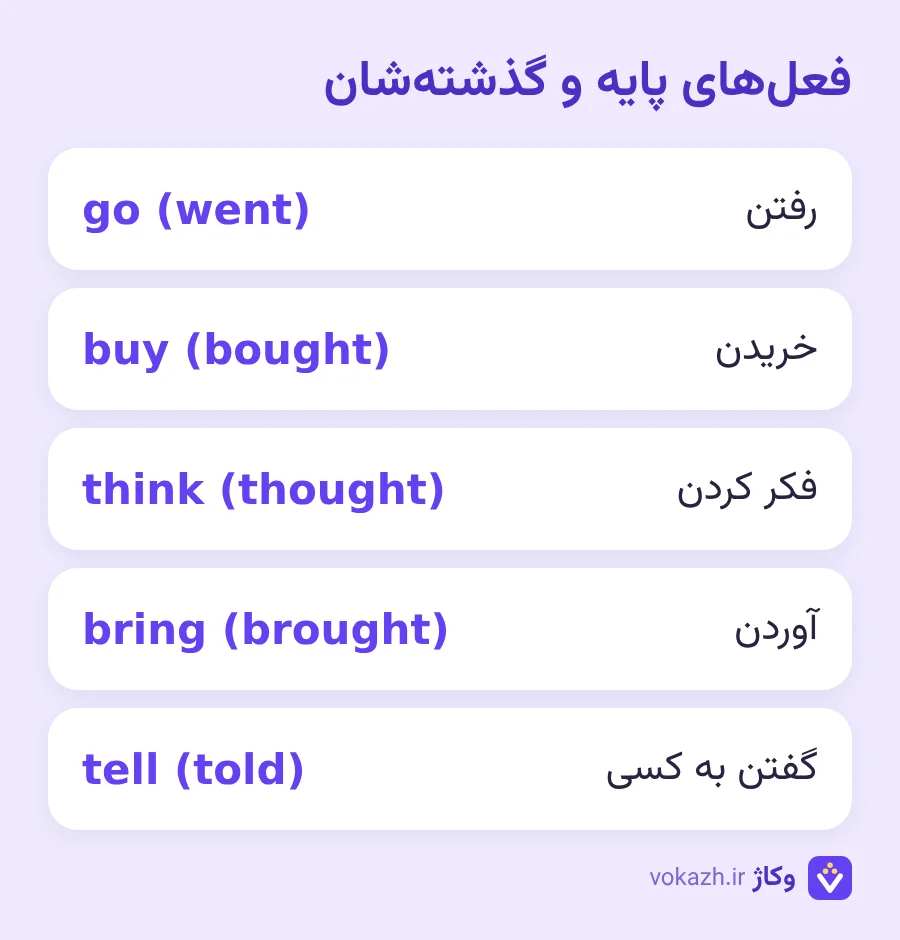
فعلها موتور جملهاند. این فعلها را با شکل گذشتهشان یاد بگیر؛ برای فعلهای بیقاعده، شکل گذشته را داخل پرانتز آوردهایم.
| لغت | معنی فارسی | مثال |
|---|---|---|
| be (was/were) | بودن | I am a student. |
| have (had) | داشتن | We have a small garden. |
| do (did) | انجام دادن | I do my homework after dinner. |
| go (went) | رفتن | She goes to the gym on Mondays. |
| come (came) | آمدن | Can you come to my party? |
| get (got) | گرفتن، به دست آوردن، رسیدن | I got a message from Ali. |
| make (made) | ساختن، درست کردن | My mother makes great soup. |
| take (took) | برداشتن، بردن | Take an umbrella with you. |
| give (gave) | دادن | He gave me his number. |
| know (knew) | دانستن، شناختن | Do you know her name? |
| think (thought) | فکر کردن | I think it's a good idea. |
| see (saw) | دیدن | I saw a cat on the roof. |
| look | نگاه کردن | Look at this photo. |
| watch | تماشا کردن | We watched a film last night. |
| want | خواستن | I want a glass of water. |
| need | نیاز داشتن | You need a ticket for the bus. |
| like | دوست داشتن | I like rainy days. |
| love | عاشق بودن، خیلی دوست داشتن | She loves music. |
| say (said) | گفتن | What did he say? |
| tell (told) | گفتن به کسی، تعریف کردن | Tell me about your trip. |
| speak (spoke) | صحبت کردن (به زبانی) | Do you speak English? |
| talk | حرف زدن | We talked for an hour. |
| ask | پرسیدن، خواستن | Can I ask a question? |
| answer | جواب دادن | Please answer the phone. |
| use | استفاده کردن | I use my laptop for work. |
| find (found) | پیدا کردن | I can't find my keys. |
| put (put) | گذاشتن | Put the milk in the fridge. |
| work | کار کردن | My father works in a hospital. |
| play | بازی کردن، نواختن | The kids are playing in the yard. |
| live | زندگی کردن | They live near the sea. |
| eat (ate) | خوردن | We eat lunch at one. |
| drink (drank) | نوشیدن | I drink two glasses of milk a day. |
| sleep (slept) | خوابیدن | The baby is sleeping. |
| read (read) | خواندن | I read before bed. |
| write (wrote) | نوشتن | Write your name here. |
| listen | گوش دادن | Listen to the teacher. |
| hear (heard) | شنیدن | I heard a strange noise. |
| learn | یاد گرفتن | I am learning to swim. |
| study | درس خواندن، مطالعه کردن | She studies at night. |
| teach (taught) | یاد دادن، درس دادن | He teaches maths. |
| buy (bought) | خریدن | I bought some bread. |
| pay (paid) | پرداختن | Can I pay by card? |
| open | باز کردن | Open the window, please. |
| close | بستن | The shop closes at ten. |
| start | شروع کردن | The film starts at eight. |
| finish | تمام کردن | Did you finish your work? |
| stop | ایستادن، متوقف کردن | Stop the car here. |
| wait | صبر کردن | Wait for me at the door. |
| help | کمک کردن | Can you help me with this box? |
| try | سعی کردن، امتحان کردن | Try this cake. |
| call | زنگ زدن، صدا زدن | I'll call you tomorrow. |
| send (sent) | فرستادن | Send me the address. |
| bring (brought) | آوردن | Bring your notebook to class. |
| leave (left) | ترک کردن، جا گذاشتن | I left my bag in the taxi. |
| meet (met) | ملاقات کردن | Nice to meet you. |
| walk | راه رفتن | I walk to work. |
| run (ran) | دویدن | He runs every evening. |
| sit (sat) | نشستن | Please sit down. |
| stand (stood) | ایستادن | We stood in the queue. |
| feel (felt) | احساس کردن | I feel tired today. |
| remember | به یاد آوردن | I remember his face. |
| forget (forgot) | فراموش کردن | Don't forget your passport. |
| understand (understood) | فهمیدن | I don't understand this word. |
| become (became) | شدن | She became a doctor. |
بسیاری از این فعلها در ترکیب با کلمههای دیگر معنی تازه پیدا میکنند؛ مثلاً get up یعنی «از خواب بلند شدن» و look for یعنی «دنبال چیزی گشتن». بعد از این فهرست، سراغ فریزال وربهای پرکاربرد برو. فرق make و do را هم در کالوکیشن انگلیسی توضیح دادهایم.
دقت کن: say و tell هر دو «گفتن» ترجمه میشوند، اما بعد از tell معمولاً شنونده میآید: She told me the news ولی She said that it was late.
آدمها و خانواده
وقتی خودت و اطرافیانت را معرفی میکنی، این لغتها اولین چیزیاند که لازم داری.
| لغت | معنی فارسی | مثال |
|---|---|---|
| family | خانواده | My family is big. |
| mother | مادر | My mother is a teacher. |
| father | پدر | My father likes football. |
| parents | والدین | My parents live in Karaj. |
| brother | برادر | My brother is older than me. |
| sister | خواهر | I have one sister. |
| son | پسر (فرزند) | Their son is five. |
| daughter | دختر (فرزند) | Her daughter plays the piano. |
| child (children) | بچه، کودک | The children are at school. |
| baby | نوزاد | The baby is crying. |
| husband | شوهر | Her husband is a driver. |
| wife | همسر (زن) | His wife works online. |
| grandmother | مادربزرگ | My grandmother tells funny stories. |
| grandfather | پدربزرگ | My grandfather has a farm. |
| uncle | عمو، دایی | My uncle lives abroad. |
| aunt | عمه، خاله | My aunt makes great cookies. |
| cousin | پسرعمو، دخترخاله و… | My cousin and I are the same age. |
| friend | دوست | She is my best friend. |
| neighbour | همسایه | Our neighbour has a dog. |
| man (men) | مرد | A man asked me the way. |
| woman (women) | زن | The woman at the desk was kind. |
| boy | پسر | The boy is wearing a red hat. |
| girl | دختر | The girl is reading a comic. |
| people | مردم، آدمها | Many people visit this park. |
انگلیسی برای عمو و دایی فقط یک کلمه دارد (uncle) و برای عمه و خاله هم یکی (aunt). اگر لازم شد دقیق بگویی، میتوانی بگویی my mother's brother.
زمان، روزها و عددها
برای قرار گذاشتن، برنامهریزی و صحبت دربارهی روزمره، این لغتها ضروریاند.
| لغت | معنی فارسی | مثال |
|---|---|---|
| time | زمان، وقت | What time is it? |
| day | روز | Have a nice day. |
| week | هفته | I go swimming twice a week. |
| month | ماه | We moved here last month. |
| year | سال | I started English this year. |
| hour | ساعت (مدت) | The trip takes two hours. |
| minute | دقیقه | Wait a minute, please. |
| morning | صبح | I drink tea in the morning. |
| afternoon | بعدازظهر | Let's meet in the afternoon. |
| evening | عصر، سرشب | We walk in the evening. |
| night | شب | I sleep at eleven at night. |
| today | امروز | Today is my birthday. |
| tomorrow | فردا | See you tomorrow. |
| yesterday | دیروز | It snowed yesterday. |
| now | اکنون | I'm busy now. |
| later | بعداً | Call me later. |
| early | زود | I got up early. |
| late | دیر | Sorry, I'm late. |
| weekend | آخر هفته | What are your plans for the weekend? |
| Monday | دوشنبه | The office is closed on Monday. |
| Friday | جمعه | We visit my grandparents on Friday. |
| Saturday | شنبه | Saturday is a working day in Iran. |
| Sunday | یکشنبه | The shop opens at ten on Sunday. |
| birthday | تولد | When is your birthday? |
| one / first | یک / اول | This is my first visit. |
| two / second | دو / دوم | Take the second street on the left. |
| three / third | سه / سوم | She lives on the third floor. |
| ten | ده | The bus comes every ten minutes. |
| hundred | صد | The book has two hundred pages. |
| thousand | هزار | There were a thousand people at the concert. |
| half | نیم، نصف | I waited half an hour. |
یادت باشد روزهای هفته و ماهها در انگلیسی همیشه با حرف بزرگ شروع میشوند: Monday, January. برای ساعت و روز از حروف اضافهی متفاوت استفاده میشود (at nine, on Monday, in May) که در حروف اضافه in، on و at کامل آمده است.
خانه و وسایل روزمره
لغتهایی که هر روز در خانه با آنها سروکار داری.
| لغت | معنی فارسی | مثال |
|---|---|---|
| house | خانه (ساختمان) | They have a house with a garden. |
| home | خانه (جایی که زندگی میکنی) | I'm going home now. |
| room | اتاق | My room is small. |
| kitchen | آشپزخانه | Dinner is ready in the kitchen. |
| bedroom | اتاق خواب | The bedroom has a big window. |
| bathroom | حمام، سرویس بهداشتی | Where is the bathroom? |
| door | در | Please lock the door. |
| window | پنجره | Open the window, it's hot. |
| table | میز | Put the plates on the table. |
| chair | صندلی | This chair is broken. |
| bed | تخت | I make my bed every morning. |
| floor | کف، طبقه | The cat is sleeping on the floor. |
| wall | دیوار | There is a clock on the wall. |
| key | کلید | I lost my key. |
| phone | تلفن، گوشی | My phone battery is low. |
| computer | رایانه | I work on my computer all day. |
| book | کتاب | This book is easy to read. |
| bag | کیف | My bag is heavy. |
| clothes | لباسها | I washed my clothes. |
| shirt | پیراهن | He's wearing a blue shirt. |
| shoes | کفشها | Take off your shoes, please. |
| light | چراغ، نور | Turn off the light. |
| money | پول | I don't have much money. |
| picture | عکس، تصویر | There is a picture of the sea in the hall. |
خوراک و نوشیدنی
در رستوران، خرید یا وقتی دربارهی غذای مورد علاقهات حرف میزنی.
| لغت | معنی فارسی | مثال |
|---|---|---|
| food | غذا | The food here is great. |
| water | آب | Can I have some water? |
| tea | چای | Would you like some tea? |
| coffee | قهوه | I drink coffee in the office. |
| milk | شیر | The milk is in the fridge. |
| bread | نان | We buy fresh bread every morning. |
| rice | برنج | Iranians eat a lot of rice. |
| meat | گوشت | I don't eat red meat. |
| chicken | مرغ | We had chicken for lunch. |
| fish | ماهی | This fish is from the Caspian Sea. |
| egg | تخممرغ | I had two eggs for breakfast. |
| fruit | میوه | Eat more fruit. |
| apple | سیب | This apple is sweet. |
| vegetable | سبزی، سبزیجات | Carrots are my favourite vegetable. |
| cheese | پنیر | I like bread and cheese. |
| sugar | شکر | No sugar, please. |
| salt | نمک | Pass me the salt. |
| breakfast | صبحانه | Breakfast is at seven. |
| lunch | ناهار | Let's have lunch together. |
| dinner | شام | What's for dinner? |
| cake | کیک | She made a chocolate cake. |
| soup | سوپ | This soup is too salty. |
| restaurant | رستوران | We went to a new restaurant. |
| hungry | گرسنه | I'm really hungry. |
| thirsty | تشنه | The kids are thirsty. |
مکانها، شهر و سفر
برای پیدا کردن راه، سفر و صحبت دربارهی شهرت.
| لغت | معنی فارسی | مثال |
|---|---|---|
| city | شهر | Tehran is a busy city. |
| town | شهر کوچک | I grew up in a small town. |
| country | کشور | Which country are you from? |
| street | خیابان | The bank is on this street. |
| road | جاده، خیابان | The road was closed. |
| shop | مغازه | The shop is next to the bakery. |
| market | بازار | We bought vegetables at the market. |
| school | مدرسه | My school is near my house. |
| hospital | بیمارستان | She works at the hospital. |
| park | پارک | Let's go to the park. |
| station | ایستگاه | The train station is far. |
| airport | فرودگاه | We arrived at the airport at six. |
| hotel | هتل | The hotel was clean and quiet. |
| bank | بانک | I need to go to the bank. |
| car | ماشین | My car is in the garage. |
| bus | اتوبوس | I take the bus to work. |
| train | قطار | The train leaves at noon. |
| taxi | تاکسی | Let's take a taxi. |
| ticket | بلیت | I bought two tickets. |
| map | نقشه | Can you show me on the map? |
| left | چپ | Turn left at the corner. |
| right | راست | The museum is on your right. |
| near | نزدیک | Is there a pharmacy near here? |
| far | دور | The beach is not far. |
| holiday | تعطیلات | We had a great holiday in the north. |
| trip | سفر (کوتاه) | How was your trip? |
بدن و سلامتی
برای وقتی که به دکتر یا داروخانه میروی یا حالت را توضیح میدهی.
| لغت | معنی فارسی | مثال |
|---|---|---|
| head | سر | My head hurts. |
| eye | چشم | She has brown eyes. |
| ear | گوش | I have a pain in my ear. |
| mouth | دهان | Open your mouth, please. |
| hand | دست | Wash your hands before eating. |
| arm | بازو | He broke his arm. |
| leg | پا (از ران تا مچ) | My legs are tired after the walk. |
| foot (feet) | پا (کف پا) | My feet are cold. |
| back | کمر، پشت | I have back pain. |
| tooth (teeth) | دندان | Brush your teeth twice a day. |
| doctor | دکتر | You should see a doctor. |
| medicine | دارو | Take this medicine after meals. |
| ill / sick | بیمار | I was sick last week. |
| pain | درد | The pain is getting better. |
| cold | سرماخوردگی؛ سرد | I have a cold. |
کار و درس
برای کلاس، محل کار و صحبت دربارهی شغل.
| لغت | معنی فارسی | مثال |
|---|---|---|
| job | شغل | I like my new job. |
| work | کار | I go to work by metro. |
| office | دفتر، اداره | Our office is on the fifth floor. |
| company | شرکت | She works for a big company. |
| boss | رئیس | My boss is very fair. |
| meeting | جلسه | The meeting starts at ten. |
| student | دانشآموز، دانشجو | There are twenty students in my class. |
| teacher | معلم | Our teacher speaks slowly. |
| class | کلاس | English class is on Tuesday. |
| lesson | درس | Today's lesson is about food. |
| homework | تکلیف | I have a lot of homework. |
| exam | امتحان | The exam was easy. |
| question | سؤال | That's a good question. |
| answer | جواب | I know the answer. |
| word | کلمه | What does this word mean? |
| language | زبان | English is a global language. |
| problem | مشکل | We have a small problem. |
| idea | ایده | That's a great idea. |
| example | مثال | Can you give me an example? |
| ایمیل | I'll send you an email. |
صفتهای پرکاربرد
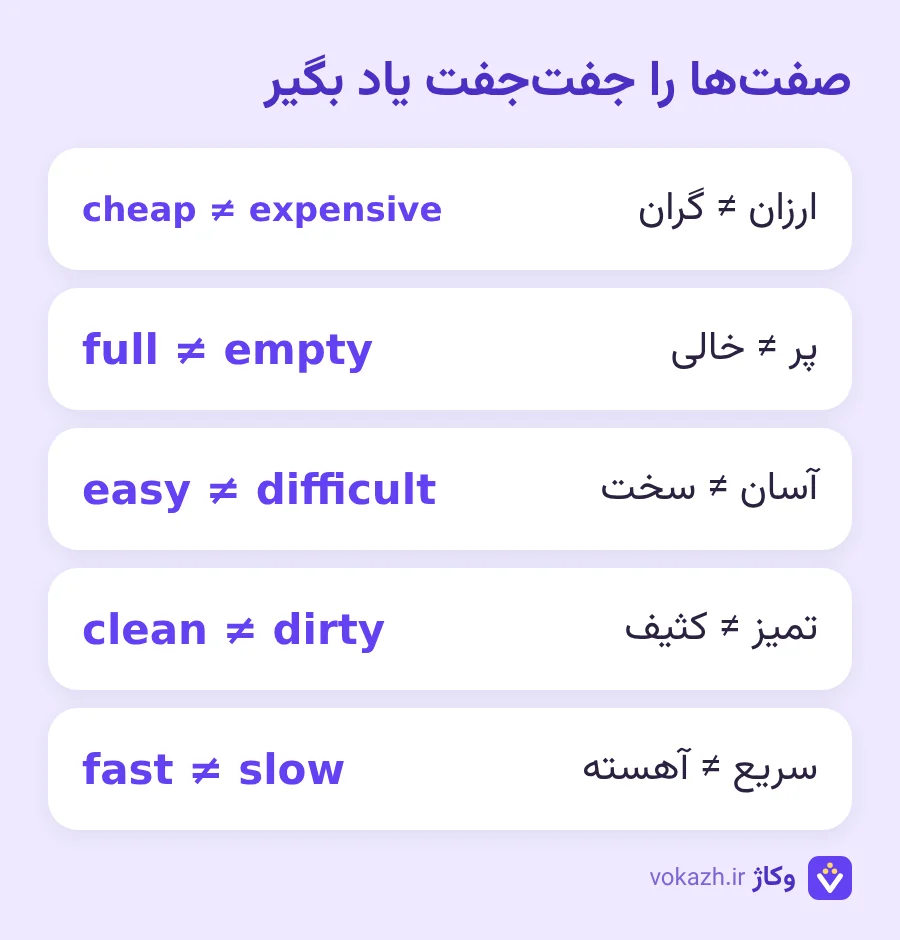
صفتها را جفتجفت یاد بگیر؛ هر صفت با متضادش بهتر در ذهن میماند.
| لغت | معنی فارسی | مثال |
|---|---|---|
| good | خوب | This is a good book. |
| bad | بد | The weather is bad today. |
| big | بزرگ | They live in a big house. |
| small | کوچک | I have a small car. |
| long | بلند، طولانی | It was a long day. |
| short | کوتاه | She has short hair. |
| new | نو، جدید | I bought a new phone. |
| old | قدیمی؛ پیر | This is an old building. |
| young | جوان | My teacher is very young. |
| hot | داغ، گرم | The soup is hot. |
| cold | سرد | The water is cold. |
| easy | آسان | The test was easy. |
| difficult | سخت | English spelling is difficult. |
| happy | خوشحال | I'm happy to see you. |
| sad | غمگین | The film was sad. |
| tired | خسته | I'm tired after work. |
| busy | مشغول، شلوغ | I'm busy this week. |
| free | آزاد؛ رایگان | Are you free tonight? |
| cheap | ارزان | These apples are cheap. |
| expensive | گران | That watch is expensive. |
| fast | سریع | This train is fast. |
| slow | آهسته | The internet is slow today. |
| clean | تمیز | The room is clean. |
| dirty | کثیف | My shoes are dirty. |
| beautiful | زیبا | What a beautiful view! |
| nice | خوب، دلپذیر | Have a nice weekend. |
| important | مهم | This meeting is important. |
| interesting | جالب | The story was interesting. |
| boring | خستهکننده، کسلکننده | The lesson was boring. |
| full | پر | The bus is full. |
| empty | خالی | The fridge is empty. |
| open | باز | Is the shop open? |
| right | درست | That's the right answer. |
| wrong | غلط | I took the wrong bus. |
| same | یکسان | We have the same phone. |
| different | متفاوت | Our ideas are different. |
| ready | آماده | Dinner is ready. |
| sure | مطمئن | Are you sure? |
| favourite | مورد علاقه | Blue is my favourite colour. |
| quiet | ساکت، آرام | The library is quiet. |
نکته وکاژ: صفتها را جفتجفت روی کارت بنویس؛ مثلاً روی کارت «The test was ___. I finished in ten minutes.» و پشتش «easy (≠ difficult)». اگر نمیخواهی زمان مرورها را خودت حساب کنی، میتوانی همین لغتها را در وکاژ اضافه کنی تا درست سر موعد برای مرور برگردند. روش مرور بهموقع را ببین.
اشتباه رایج: interesting یعنی «جالب» (چیزی که توجه را جلب میکند) و interested یعنی «علاقهمند» (حس آدم). جملهی I am interesting in music غلط است؛ درستش I am interested in music است. همین قاعده برای boring / bored و exciting / excited هم برقرار است.
قیدها و کلمههای ربط
این کلمهها به جملهها رنگ و نظم میدهند و کمک میکنند روانتر حرف بزنی.
| لغت | معنی فارسی | مثال |
|---|---|---|
| very | خیلی | It's very hot today. |
| really | واقعاً | I really like this song. |
| too | هم؛ بیش از حد | I like it too. / It's too expensive. |
| also | همچنین | She also speaks French. |
| always | همیشه | I always drink tea after lunch. |
| usually | معمولاً | I usually wake up at seven. |
| often | اغلب | We often eat out on Fridays. |
| sometimes | گاهی | Sometimes I walk to work. |
| never | هرگز | I never eat fast food. |
| again | دوباره | Say it again, please. |
| here | اینجا | Come here. |
| there | آنجا | Put it there. |
| then | سپس؛ آن موقع | First wash your hands, then eat. |
| so | پس، بنابراین | It was raining, so we stayed home. |
| only | فقط | I only have five minutes. |
| just | فقط؛ همین الان | I just arrived. |
| maybe | شاید | Maybe it will rain later. |
| still | هنوز | Are you still at work? |
| already | قبلاً، تا حالا | I've already eaten. |
| together | با هم | Let's study together. |
احساسها، آبوهوا و طبیعت
برای شروع گفتوگو، گفتن حال و حرف زدن دربارهی هوا.
| لغت | معنی فارسی | مثال |
|---|---|---|
| weather | آبوهوا | How's the weather in Rasht? |
| sun | خورشید | The sun is very strong today. |
| rain | باران؛ باریدن | It rains a lot in the north. |
| snow | برف؛ برف باریدن | We had snow last night. |
| wind | باد | The wind is cold. |
| sky | آسمان | The sky is clear tonight. |
| tree | درخت | There's an old tree in our yard. |
| sea | دریا | I love swimming in the sea. |
| mountain | کوه | We climbed the mountain. |
| animal | حیوان | What's your favourite animal? |
| afraid | ترسیده | I'm afraid of dogs. |
| angry | عصبانی | Why are you angry? |
| worried | نگران | She's worried about her exam. |
| excited | هیجانزده | The kids are excited about the trip. |
| bored | بیحوصله | I'm bored. Let's go out. |
| surprised | متعجب | I was surprised by the news. |
از این فهرست تا ۱۰۰۰ لغت: نقشهی راه
وقتی این هسته را یاد گرفتی، رسیدن به هزار لغت پرکاربرد قدم بعدی است. سه راه مطمئن پیشنهاد میکنیم:
۱. فهرست رسمی را سطحبهسطح جلو برو
در وبسایت Oxford Learner's Dictionaries میتوانی فهرست Oxford 3000 را بر اساس سطح فیلتر کنی و لغتهای A1 و A2 را ببینی. هر لغتی که اینجا نبود و در آن فهرست بود، کاندیدای قدم بعدی توست. منبع دیگر English Vocabulary Profile است که نشان میدهد زبانآموزها در هر سطح، کدام معنی هر لغت را بلدند.
۲. خانوادهی کلمهها را بساز
از بیشتر لغتهای این فهرست میتوانی با پیشوند و پسوند چند لغت دیگر بسازی: happy → unhappy, happiness، help → helpful, helpless، teach → teacher. این سریعترین راه افزایش دامنهی لغت است. راهنمایش را در پیشوند و پسوند انگلیسی ببین.
۳. از ورودی واقعی بردار
با خواندن متنهای ساده و داستانهای کوتاه، لغتهای تازه را در جمله میبینی. مطلب داستان کوتاه انگلیسی برای مبتدیها برای همین سطح نوشته شده است.
اگر روزی چند لغت تازه اضافه کنی و مرورها را جا نیندازی، رسیدن به هزار لغت در چند ماه کاملاً شدنی است. حساب دقیقش به وقت روزانهات بستگی دارد که در روزی چند لغت حفظ کنیم توضیحش دادهایم. این لغتها پایهی همهی مهارتهای بعدیاند؛ از گرامر و مکالمه تا کل مسیر آموزش زبان انگلیسی که در صفحهی اصلیمان معرفی کردهایم.
تمرین کن
جای خالی را پر کن: I'm ___ in history. (interesting / interested)
interested — برای حس آدم از شکل ed استفاده میکنیم.
say یا tell؟ She ___ me a funny story.
told — بعد از tell شنونده میآید.
متضاد این صفتها را بنویس: cheap, full, early
expensive, empty, late
این جمله را درست کن: My sister is a doctor. He works at a hospital.
She works at a hospital. — برای خواهر از she استفاده میکنیم.
گذشتهی این فعلها چیست؟ buy, bring, think
bought, brought, thought
سؤالهای رایج
چرا این فهرست هزار لغت نیست؟
چون هستهی پرکاربردترین لغتها را با جملهی نمونه آوردهایم تا قابل یادگیری باشد. در بخش آخر گفتهایم چطور با فهرستهای رسمی، خانوادهی کلمهها و خواندن متن ساده به هزار لغت برسی.
لغات پرکاربرد انگلیسی را از کجا بیاورم؟
فهرستهای بسامدی معتبر مثل Oxford 3000 که لغتها را به سطحهای CEFR وصل کردهاند، و English Vocabulary Profile که سطح هر معنی را نشان میدهد، منابع مطمئنیاند.
روزی چند لغت از این فهرست یاد بگیرم؟
تعدادی که بتوانی هر روز مرورش کنی. برای بیشتر آدمها شروع با چند لغت در روز و ادامهی منظم بهتر از عددهای بزرگ و رها کردن است.
آیا باید معنی همهی لغتها را حفظ کنم یا جمله را؟
جمله را هم یاد بگیر. لغتی که در جمله یاد گرفته شود، هم بهتر در ذهن میماند و هم راحتتر در صحبت به کار میرود.
نظرها
هنوز نظری ثبت نشده؛ اولین نفر باش.